Insights / Leadership & Team
1000's of staff, Yet He Isn't The Most Important Person In The Room
Stories from the boardroom to the yacht.
The sun was going down over Dubai last week, the drinks had settled, and I was co-hosting with Jordan on a yacht, with three founder CEOs lined up for a fireside chat in front of 50+ founders and operators who had come out for the evening.
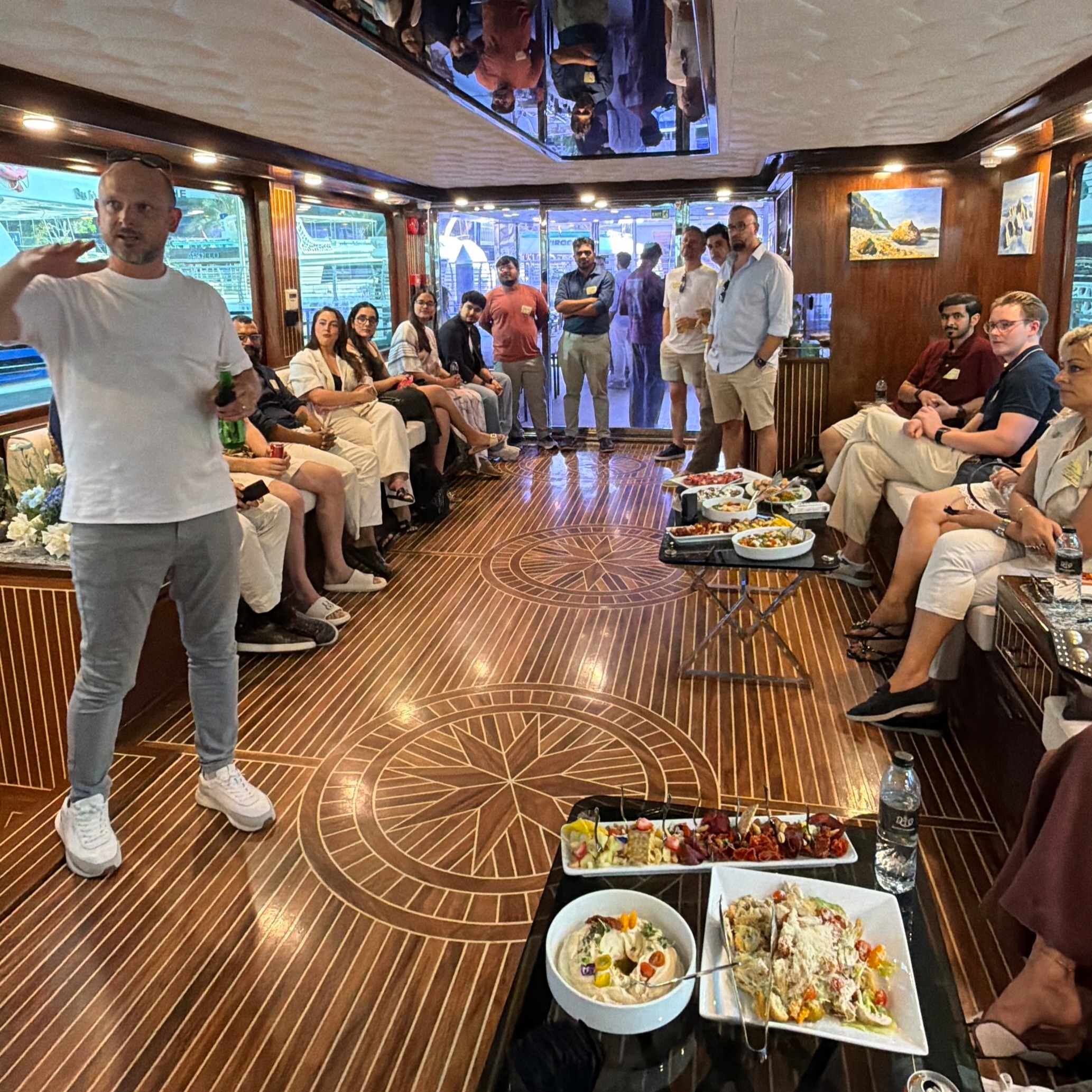
I had a rough idea of where I thought the conversation would go. Growth, fundraising, the usual stories about the deal that nearly didn't happen. What I didn't expect was for all three of them to be as honest, and go as deep, as they did.
One moment that stayed with me came from Ali Merchant. Ali leads a business of thousands of people, and he said something I've been turning over in my head ever since. He doesn't treat himself as the most important person in the business. Yes, he's the CEO. Yes, he's the founder. Yes, ultimately the buck stops with him. But he treats his team and staff with respect, he empowers them to take agency over the job that they do, and he gives them a seat at the table (metaphorically and physically) and the ability to share their opinions when they see the right moment to do so.
I've heard plenty of founders say similar things (often on a careers page or in a job advert), but what struck me about Ali was that he clearly meant it. He had managed to hold on to it at a scale where most founders have long since lost touch with the people actually doing the work. It's one thing to make everyone feel heard when there are five of you round a table. It's a very different thing when there are thousands.
And the more I thought about it on the flight home, the more I realised that you can't win without hiring great people, and you can't have great people without providing the right support structure and the right environment to grow. They must have a genuine sense that they are part of the mission rather than simply carrying out someone else's instructions. When you get that right, it really is the secret to success, because people who feel they own a piece of the outcome make better decisions when you're not in the room, they push back when something doesn't make sense, and they stay long enough for the investment you've made in them to pay off.
This connects directly to the thing I spend most of my time on with founders, which is revenue that still runs through them. Very often the reason the founder is still in every deal, every pricing conversation and every key decision isn't that the team can't do it. It's that the team has never really been given the room to do it, or has learned over time that their opinion doesn't count for much because the founder will override it anyway. You end up with a business full of capable people who have quietly stopped taking ownership, and a founder who is exhausted and can't understand why nobody steps up.
However, there is a flip side to this. If you're serious about building a team that is focused on the mission, you have to be equally serious about the people who aren't. Someone who isn't bought in, who isn't contributing, or who has become cynical about where the business is heading doesn't just underperform on their own. They drain the energy of the people around them, they make your best people wonder why they're working so hard, and over time they pull the culture down to their level.
Most founders I know have held on to someone for too long at some point. You tell yourself they'll come round, that the timing isn't right, that the disruption of moving them on will cost more than keeping them, and it very rarely does. The irony is that giving everyone a seat at the table only works if the people sitting at it are all pulling in the same direction, and protecting that is as much a part of the founder's job as creating it in the first place.
The question of exactly how you tell the difference between someone who needs to go and someone who just needs more support, or a different role, is one I'm saving for another newsletter.
Here's what I want to leave you with from that evening on the water.
If you asked the most junior person in your business whether their opinion genuinely counts, what would they honestly say?
When was the last time someone on your team changed your mind about something that really mattered?
Is there someone in your business right now who you already know isn't focused on the mission, and what is actually keeping them there?
If you're a founder who has built a good team but still finds that every important decision, and every important deal, ends up back on your desk, I'd love to have that conversation. Just reply to this email. No pitch, no agenda.
Simon
www.revenueandbeyond.com