Insights / Pipeline & Sales
Holding your price
Letter 05. Many people discount without even being asked, and essentially negotiate against themselves.
Discounting your rates is often a sign that the buyer simply hasn't understood, or believed in, the value of the product or service that you are selling them.
I've been in this situation many times in the past. And while some discounts are unavoidable, and can play their part in a natural negotiation, I've seen and heard many people discount without even being asked, and essentially negotiate against themselves.
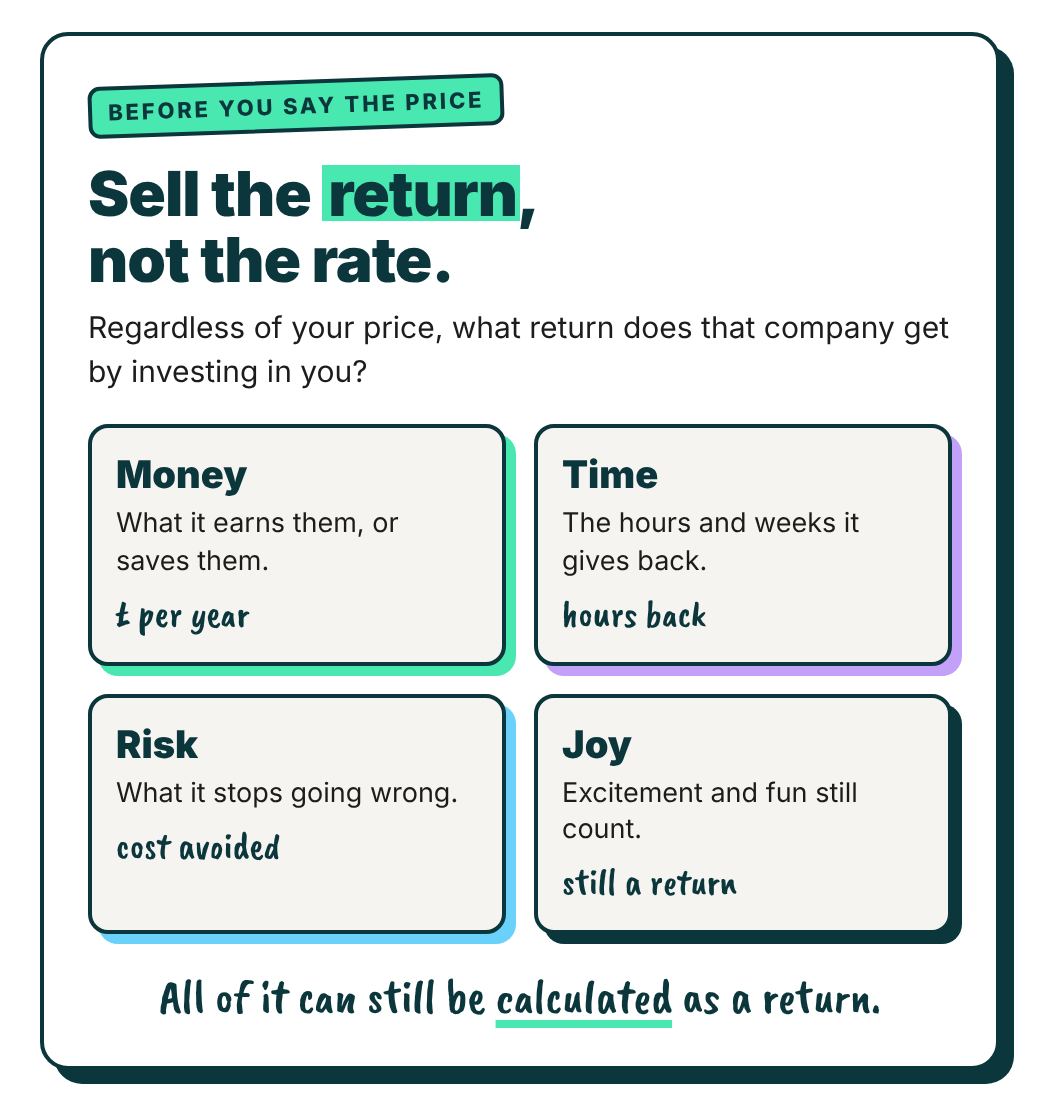
The thing to establish is value. Regardless of your price, what return does that company get by investing in your product or service? Often there'll be a monetary return, a time-based return or a risk-based return. Other times it's simply a product that brings joy, excitement and fun. But all of those things can still be calculated in terms of a return.
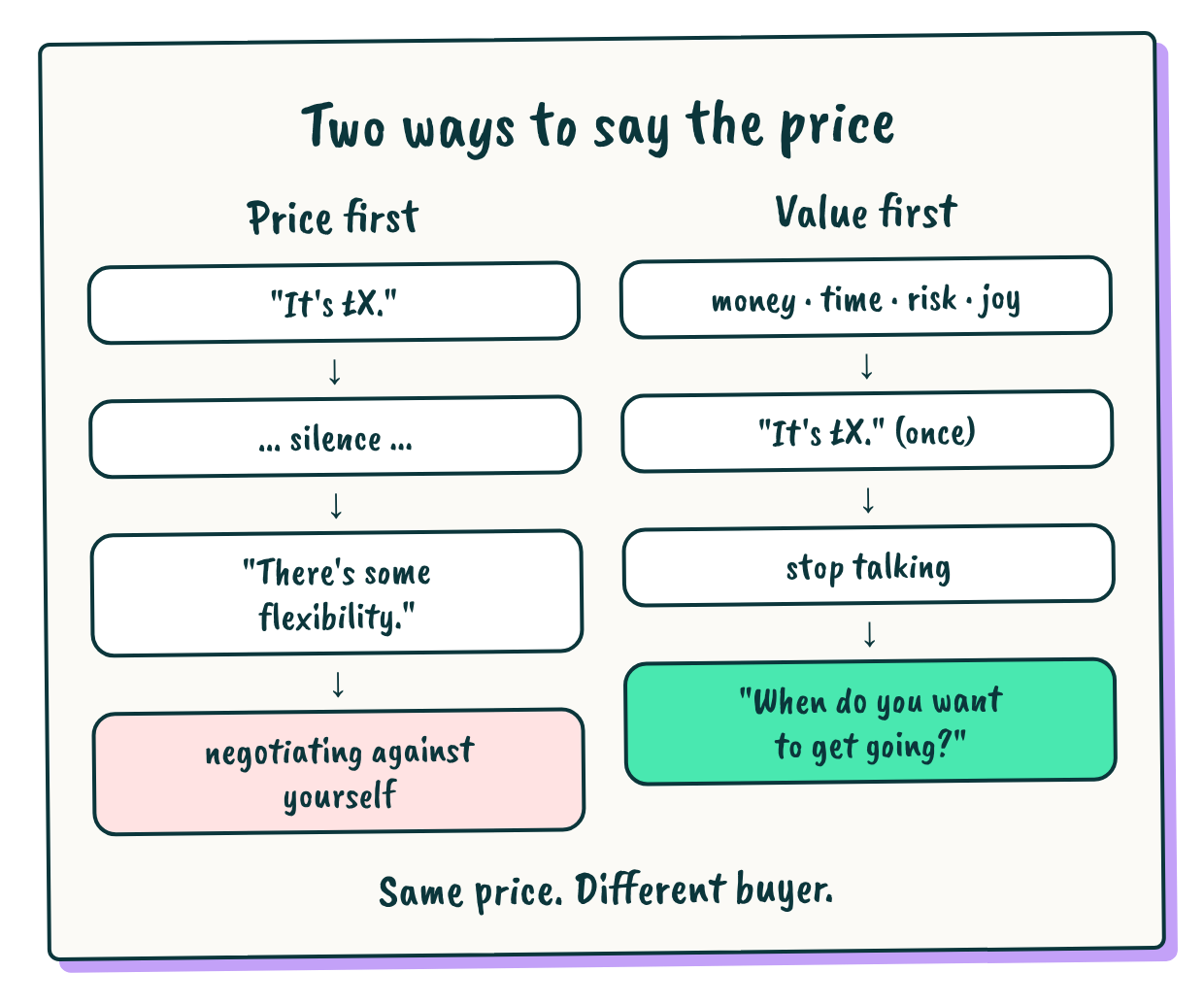
Negotiating against yourself usually happens in the silence straight after you say the price. You hear the pause and fill it. "There's some flexibility." The buyer hadn't pushed. You did the discounting for them.
A discount tells your buyer the first number wasn't real. And once they believe that, every number after it is up for negotiation too.
So I keep it simple, with flat fees and a firm anchor. Say the price plainly, once, and then stop talking.
If they push back, don't reach for a lower number. Go back to the return. And if you do move, never move for nothing. Trade it for a longer term, payment upfront or a smaller scope.
Then close. "When do you want to get going?" And say nothing else.
"A discount tells your buyer the first number wasn't real."
When did you last drop your price before anyone actually asked you to?

Exited founder. Three exits. Hit reply, I read every one.

P.S. Next Tuesday: the moment I realised the business had outgrown me, and what I had to change about my own job.